

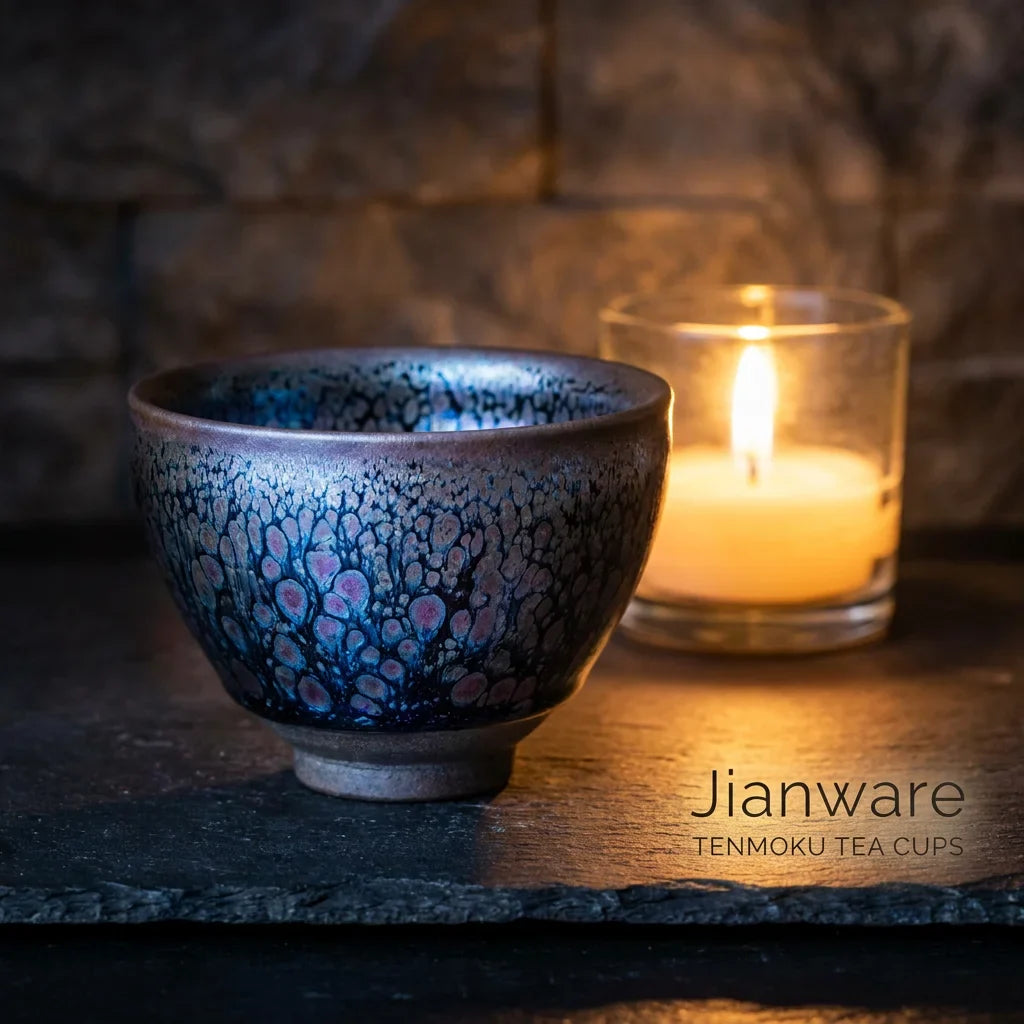
A millennium ago, during the zenith of the Song Dynasty—an era of unparalleled cultural and artistic sophistication—the emperors sat amidst boundless treasures. Gold, jade, and fine celadons were plenty, yet their hearts were captivated by a singular, profound darkness: the Jian Zhan (Tenmoku).
From Emperor Huizong’s personal treatises praising its glaze to the grand tea banquets of the imperial court, the Jian Zhan became the 'heart's desire' of the royals. This obsession was no accident; it was a perfect convergence of tea culture, craftsmanship, aesthetics, and imperial power—a hidden spiritual code of the Great Song.
1. The Perfect Vessel for the 'Battle of Tea'
The obsession began with the rise of Doucha (Tea Competition). In the Song Dynasty, tea was more than a beverage; it was a spiritual pursuit. The victory in a tea competition depended on the 'froth'—which needed to be as white as milk and stay thick and persistent.
The black glaze of Jianware is the perfect vessel for this art. Since Song tea was prized for its white color, the black glaze maximized the visual contrast. As Emperor Huizong wrote in his Grand Treatise on Tea: 'The glaze should be deep and dark... to better illuminate the brilliance of the tea.' For the royals, the Jian Zhan was the indispensable carrier of this refined elegance.
2. Alchemy of Fire: A Captured Universe
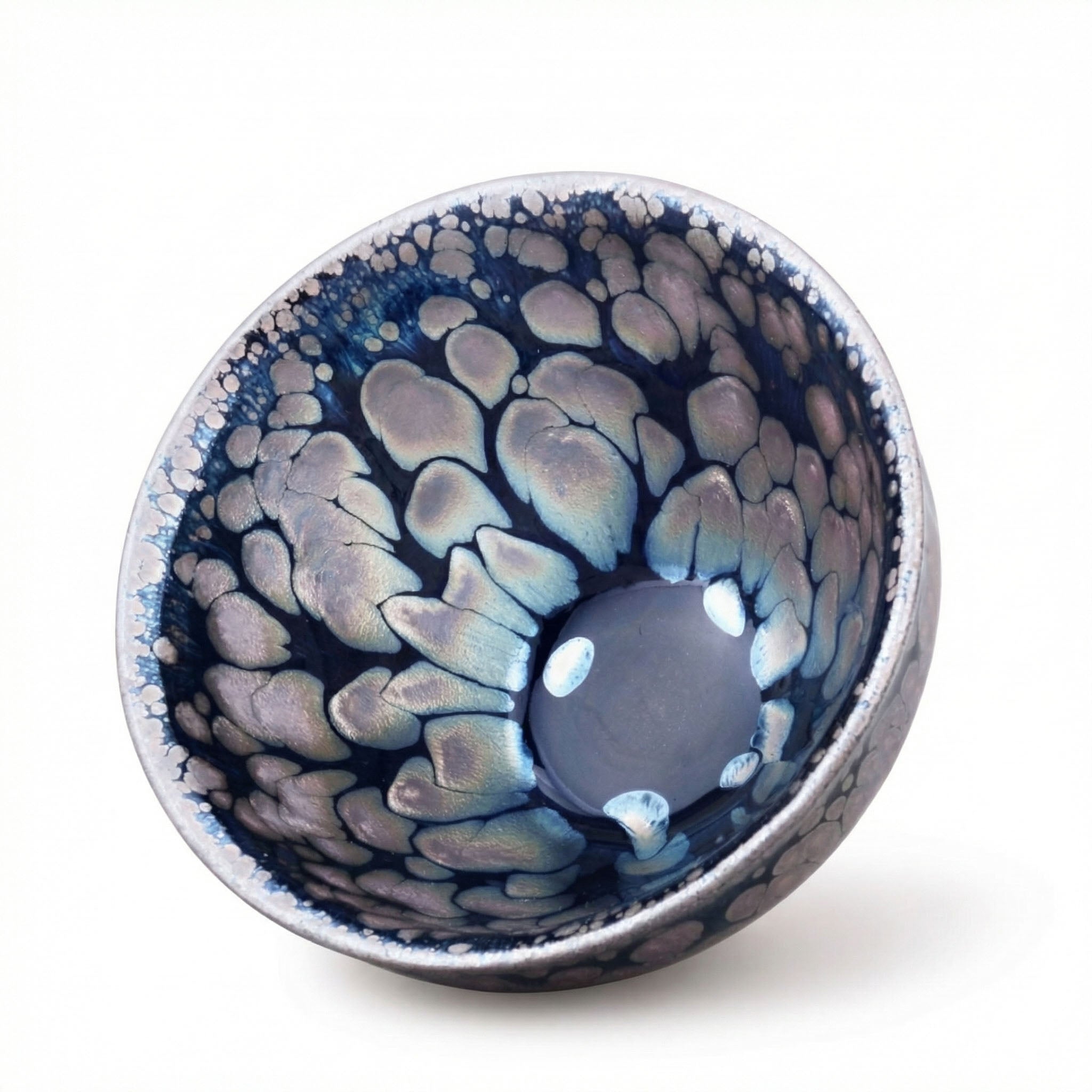
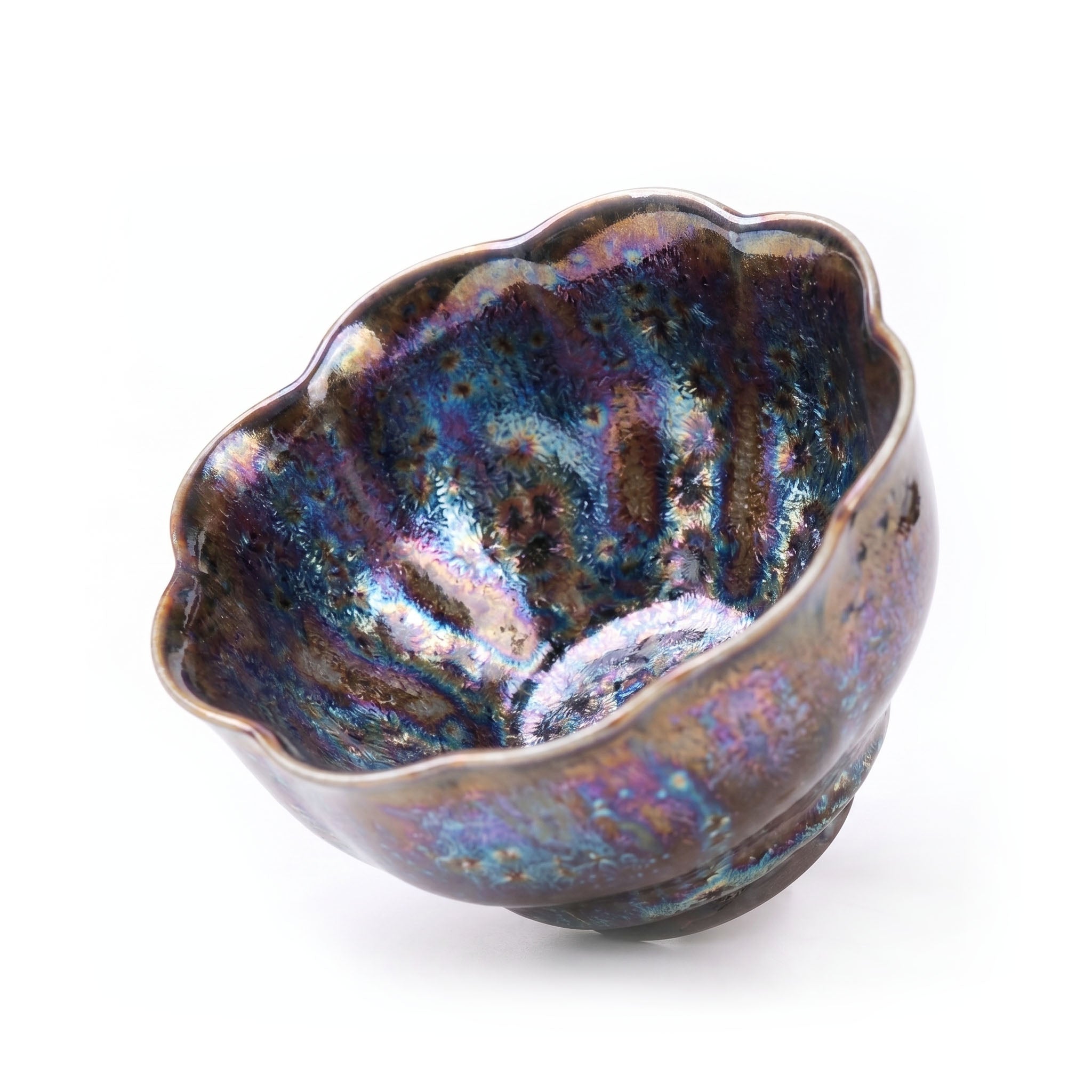
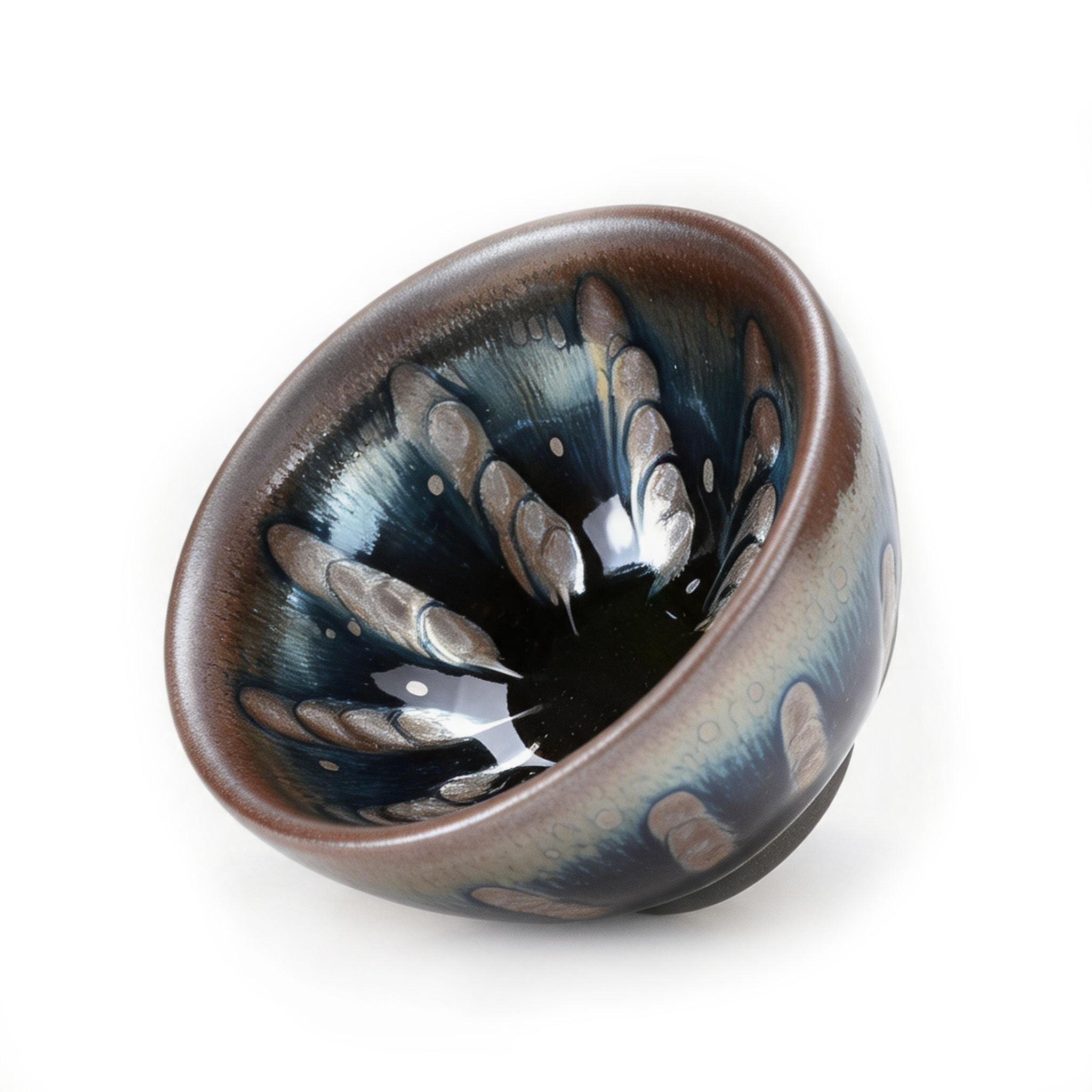
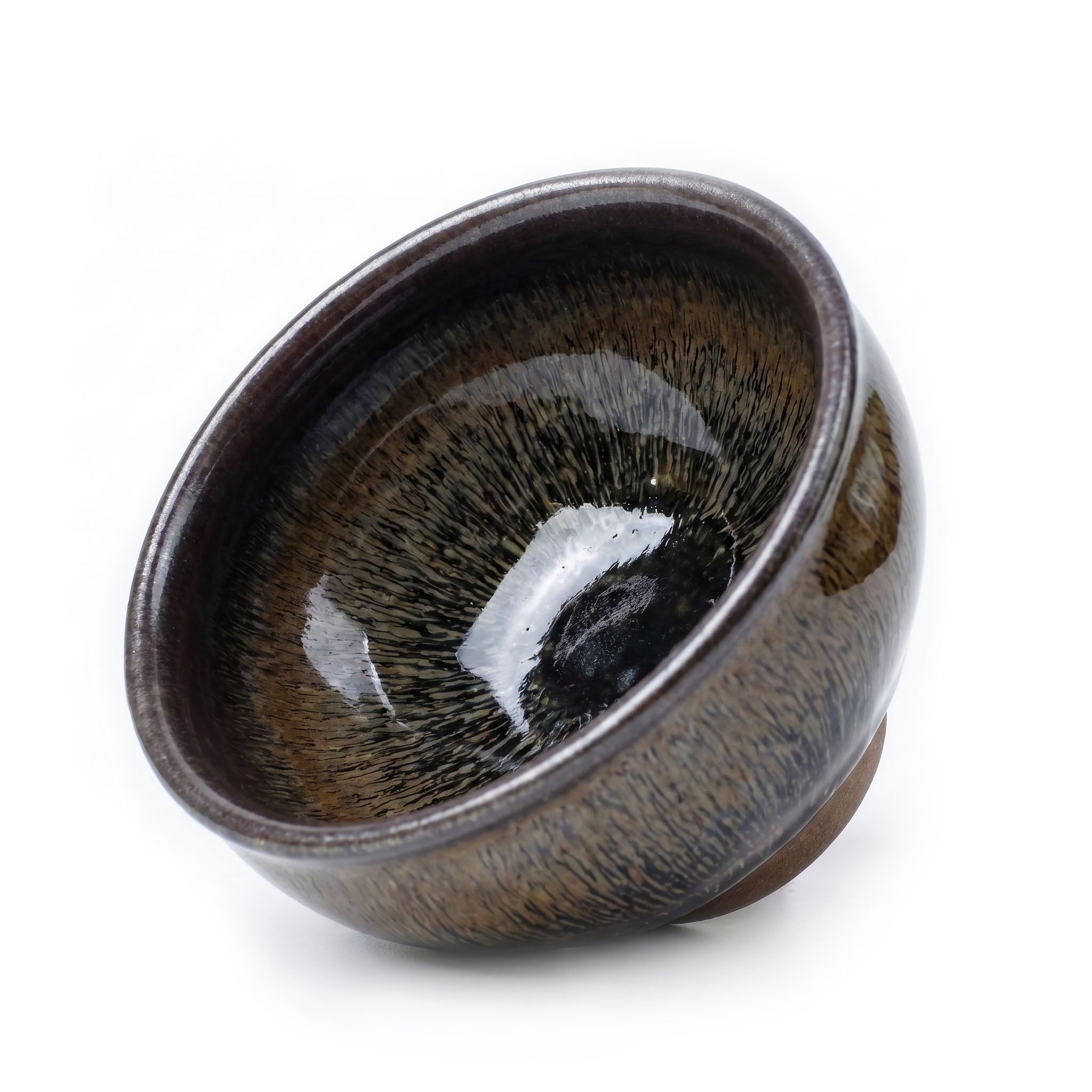
What fascinated the emperors was the 'Kiln Change'—the unpredictable alchemy at 1300°C. In the kiln, iron-rich minerals dance with fire, crystallizing into patterns that no human hand could ever paint: Rabbit Hair, Oil Spots, or the legendary Yaobian (Star Tenmoku).
No two cups are ever identical. For an emperor who possessed everything, this 'unrepeatable beauty' was the ultimate luxury. Owning a Jian Zhan meant owning a piece of the cosmos, a 'hidden realm' created by nature itself. This exclusivity made it a symbol of unparalleled status.
3. The Zen of Stillness and Imperial Power
The aesthetic of the Song Dynasty favored inner peace over outward flamboyance. The Jian Zhan’s heavy, grounded feel and its warm, obsidian luster reflected the Zen philosophy of 'Great art is hidden in simplicity.'
It was a vessel for meditation. Legend has it that Emperor Huizong once dreamed of the Moon Goddess serving him tea in a Jian Zhan. This spiritual connection led him to designate the kilns of Shuiji as 'Imperial Kilns,' marking the cups with 'Gongyu' (For Imperial Tribute). Today, when you hold a piece from Jianware, you are touching that same imperial legacy.
The Timeless Legacy
The Song Dynasty has faded into history, but the mystery of the Jian Zhan remains. It is more than a teacup; it is a witness to an era of elegance. At Jianware, we invite you to look into the depths of the black glaze and rediscover the obsession that once defined an empire.
Share:
How Original Mineral Glaze Defines the Quality of Jianzhan
Why Jian Zhan (Tenmoku) is the Ultimate Choice for Prestigious Business Gifts